Modern Rustic Interior Design Ideas a space that feels both grounded and contemporary. A home where aged patinas and sleek lines coexist. This is the essence of modern rustic design themes. It blends the warmth of reclaimed wood with the crispness of minimalist silhouettes. It juxtaposes rugged textures with refined accents. The result is a dwelling that feels authentic, comfortable, and utterly now.

Origins and Evolution
Rustic design has roots in countryside cottages and mountain chalets. Think heavy oak beams, stone hearths, and hand-hewn furniture. Yet, as tastes evolved, the need arose for a cleaner, more streamlined interpretation. Thus emerged modern rustic design themes, a hybrid that honors tradition while embracing contemporary aesthetics. It rejects fusty clichés in favor of curated imperfection. It celebrates the patina of time without succumbing to heaviness.
Early pioneers stripped down ornate embellishments and highlighted structural elements. They paired weathered barnboard with steel-framed windows. They contrasted raw stone with glass and concrete. Over decades, this vocabulary expanded to include artisanal metals, organic textiles, and sculptural lighting. The modern rustic home is therefore neither too polished nor too primitive. It exists in a harmonious middle ground.
Core Principles of Modern Rustic Design Themes
- Structural Authenticity
Expose beams, brackets, and masonry. Let the skeleton of the building tell its story. - Textural Contrast
Rough-hewn wood against polished stone. Burlap alongside velvet. These juxtapositions enliven the eye. - Neutral Palette with Punctuated Accents
Whites, grays, taupes form the canvas. Occasional deep greens, navy blues, or matte blacks create focal points. - Modern Silhouettes
Choose furniture with clean lines. Sofas with low profiles. Chairs with slender legs. - Organic Imperfection (Wabi-Sabi)
Embrace asymmetry, small cracks, and mineral veining. They impart authenticity. - Functional Minimalism
Less clutter, more intent. Each piece should earn its place.
Materials and Textures
- Reclaimed Wood: Barnboard, driftwood, old beams. A history written in knots and nail holes.
- Natural Stone: Fieldstone fireplaces, slate floors, honed marble countertops.
- Metals: Brushed brass, oxidized steel, patinated copper. They lend industrial contrast.
- Textiles: Wool, linen, jute, and nubby boucle. They soften hard surfaces.
- Glass: Floor-to-ceiling panes, textured glass cabinets. Light dances off every facet.
A table carved from a single slab of walnut sits atop hairpin legs. Overhead, a chandelier of hammered copper echoes the table’s rough-hewn edges. Underfoot, a kilim rug weaves cultural narrative into the floor. This layering of surfaces is at the heart of modern rustic design themes.
Color Palette Strategies
- Earthbound Neutrals
Clay, ochre, sandstone—each hue recalls the outdoors. - Cool Accents
Charcoal, slate, and graphite punctuate without overwhelming. - Forest Inflections
Deep emerald or moss green for an instant connection to foliage. - Metallic Hints
A gilded mirror frame or brass cabinet pulls bring warmth and sparkle.
Employ these palettes judiciously. Walls can remain pale; the drama resides in accent walls, furnishings, and accessories. A single forest-green credenza or a charcoal slate hearth can transform a room.
Furniture and Silhouettes
- Low-Profile Sofas: Upholstered in linen or leather, with tapered legs.
- Rustic Tables: Live-edge dining tables or cross-legged coffee tables that show raw grain.
- Modern Armchairs: Slim metal frames wrapped in boucle or shearling.
- Multifunctional Pieces: Benches with storage, nesting side tables, modular shelving.
Select sculptural forms that feel both substantial and airy. A bench at the foot of a bed, hewn from reclaimed pine, can float atop a sisal rug. A steel-framed bookshelf, anchored into the wall, displays pottery and driftwood finds.
Textiles and Layering
Textiles are the invisible threads that tie modern rustic design themes together. Layering a lambswool throw over a leather chesterfield. Draping linen curtains in a soft ecru hue. Scattering cushions in varied weaves—tweed, boucle, raw silk. Each adds tactility and comfort.
In the bedroom, a handwoven jute rug under the bed contrasts with crisp cotton sheets. At the table, linen napkins rest beside ceramic plates. On the sofa, velvet cushions play against nubby wool. This synesthesia of feel underscores the rustic-modern dialogue.
Lighting Strategies
Light sculpts and defines. It animates textures and casts chiaroscuro between rough and smooth. Combine:
- Pendant Lights: Edison bulbs in wire cages or clusters of smoked glass orbs.
- Floor Lamps: Tripod bases in matte black steel with linen shades.
- Wall Sconces: Swing-arm brackets in aged brass.
- Task Lighting: Under-cabinet LEDs hidden by reclaimed teak rails.
In a modern rustic design theme kitchen, a trio of pendant fixtures hangs above the island. Their warm glow complements the knotty wood. In a reading nook, a floor lamp with a slatted wooden shade filters light like forest canopy.
Room-by-Room Applications
Living Room
Anchor with a stone fireplace. Flank it with built-in shelves of reclaimed oak. A low sofa faces the hearth. A live-edge coffee table sits on a faded kilim. Leather armchairs complete the ensemble. Windows remain unadorned or dressed in simple linen drapes. Flickering candlelight in wrought-iron holders adds drama at dusk.
Kitchen
Open shelving in matt-black powder-coated steel. Countertops in honed concrete or soapstone. A butcher-block island with industrial casters. Bar stools with metal frames and leather seats. Exposed beams overhead accentuate volume. A wall-mounted pot rack displays copper pans as functional décor.
Dining Room
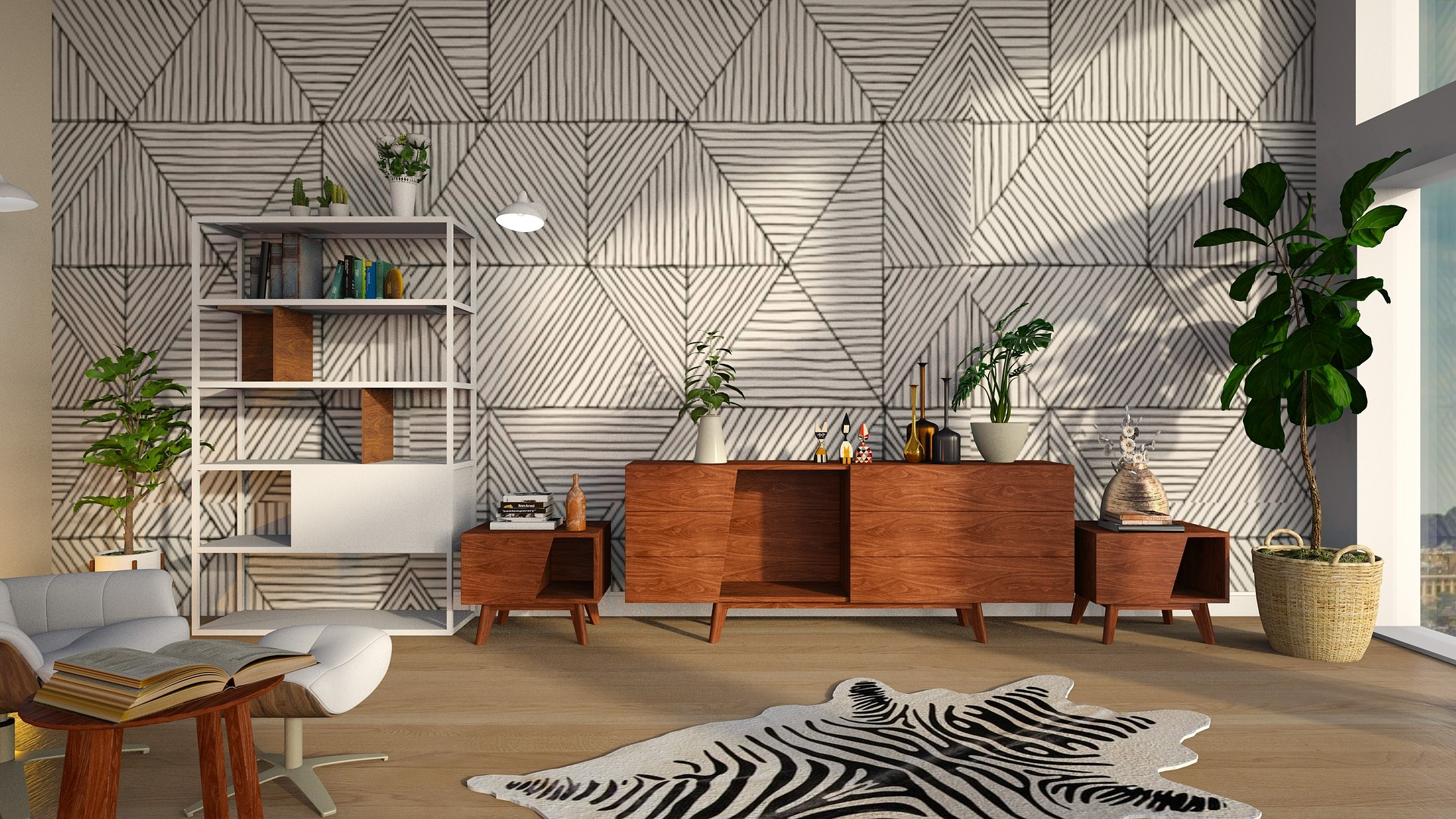
A trestle table with distressed oak. Bentwood chairs or leather-upholstered stools. A geometric rug anchors the grouping. Overhead, a statement chandelier of antler-like metal arms. A sideboard in driftwood houses linens and serveware. A row of vintage bottles on a windowsill introduces patinated glass.
Bedroom
A platform bed in bleached walnut. Crisp cotton linens in ivory. A chunky knit throw folded at the foot. Bedside tables of wrought-iron and reclaimed wood. Edison-bulb pendants suspended on leather straps. A large mirror leans against the wall, reflecting light and space.
Bathroom
Stone-tiled floors and walls. A floating vanity of white oak. Vessel sinks carved from river stone. Blackened-brass fixtures for contrast. Industrial-style pendants flank a frameless mirror. Towels in organic cotton hang on a pipe-inspired rack. A potted fern thrives in the steamy ambiance.
Home Office
A minimalist desk in charred ash with hairpin legs. A swivel chair upholstered in boucle. Open shelving in metal and wood juxtaposes binders and curios. A floor-to-ceiling window provides natural light. A linen pinboard displays sketches and notes. A wool rug insulates both sound and floor.
Outdoor Living
Weathered teak benches laced with bouclé cushions. A fire pit of river stones. Woven lanterns scatter pools of light. Stone pavers edged with gravel establish a rustic terrace. Large planters of salvaged metal house grasses and succulents.
Accessorizing and Décor
- Artisanal Ceramics: Hand-thrown vases in muted glazes.
- Woven Baskets: For storage and display.
- Vintage Finds: An old window frame as a wall accent.
- Nature’s Gifts: Mounted antlers, driftwood sculptures, or petrified wood slabs.
- Mirrors: Reclaimed frames reflect and expand.
Avoid clutter. Each object should resonate with the overall scheme. Occasionally, allow an intentionally empty shelf—a moment of negative space to let the eye rest.
Sustainability and Ethical Sourcing
True modern rustic design themes honor the planet. Seek out:
- Reclaimed and Salvaged Materials: Wood, stone, metal.
- Low-VOC Finishes: For paint and sealants.
- Fair-Trade Textiles: Wool, cotton, jute from artisan cooperatives.
- Local Craftspeople: Support regional woodworking, metalworking, and ceramics.
This conscientious approach deepens the narrative behind every element.
Common Pitfalls and Remedies
- Over-Decorating: Too many rustic objects can feel kitschy.
- Remedy: Apply the “one-third rule”—decorate only a third of visible surfaces.
- Mismatched Scales: A massive beam in a small room overwhelms.
- Remedy: Balance with lighter furnishings and reflective surfaces.
- Incongruent Styles: Ultra-modern pieces can clash with aged woods.
- Remedy: Introduce transitional elements—mixed-metal finishes or neutral upholstery—to bridge gaps.
- Harsh Contrasts: Stark black against rough wood may feel jarring.
- Remedy: Soften with mid-toned grays, warm brass, or layered textiles.
Personalization and Storytelling
Infuse spaces with personal narratives:
- Display heirloom quilts on a reclaimed ladder.
- Showcase vintage tools as wall art.
- Incorporate travel finds—ceramics, textiles, prints.
- Commission bespoke pieces—a live-edge table, a forged-iron light.
These stories transform a house into a home.
Uncommon Terminology to Enrich the Narrative
- Petrichor Palette: Earthy hues reminiscent of rain on dry soil.
- Chiaroscuro Layers: Dramatic interplay of light and shadow on textured surfaces.
- Rusticated Surfaces: Rough-hewn finishes that assert material honesty.
- Savoir-Faire Details: Artisanal touches revealing expert craftsmanship.
- Geophilic Elements: Features connecting interiors to geological processes.
These phrases can elevate descriptions in mood boards and client proposals.
Modern rustic design themes represent a harmonious fusion of past and present. They celebrate the rugged beauty of natural materials while embracing contemporary refinement. Through thoughtful selection of textures, colors, and forms, a home becomes both a sanctuary and a statement. In this balanced realm, authenticity reigns, and every surface tells a story—of origins, craft, and modern sensibility. Allow these ideas to guide the creation of spaces that feel timeless, tactile, and utterly inviting.