
Interior Design with Layered Patterns in the realm of interior artistry, the interplay of patterns can transform a prosaic room into a symphony of visual intrigue. Layered pattern design guide serves as the compass for creatives who wish to conjoin disparate motifs without creating chaos. Juxtaposing florals with geometrics, stripes with ikat, or damasks with tribal prints requires both nerve and nuance. It is an expedition into the chiaroscuro of surfaces, a dance between complexity and cohesion.
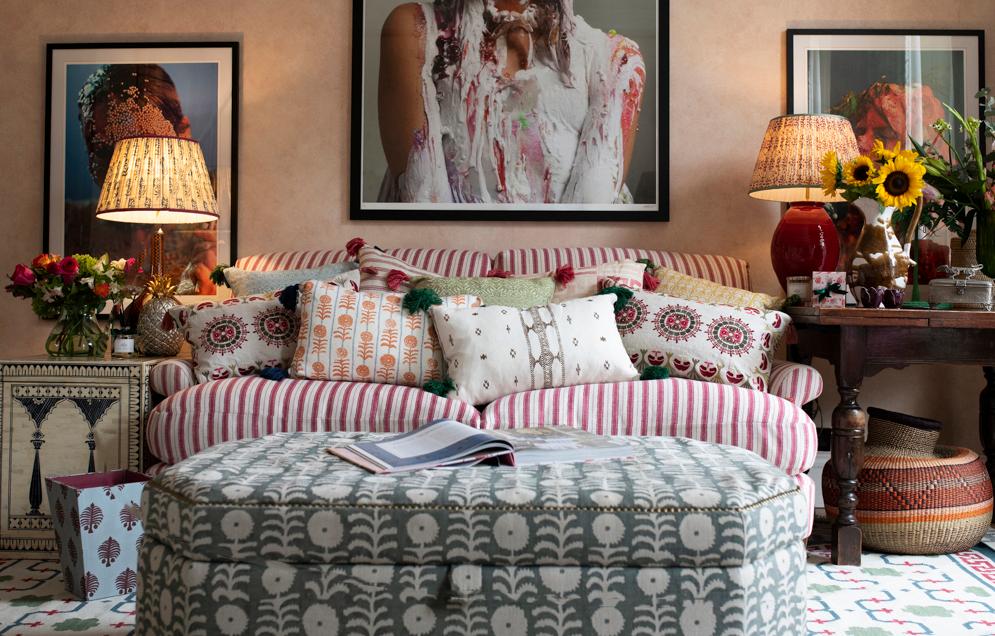
The Allure of Patterns
Patterns evoke emotion. They whisper of distant cultures and bygone eras. They conjure memories and stimulate the imagination. A textile woven in a remote village, bearing a matahatchi motif, can elicit a sense of wanderlust. Meanwhile, a monochromatic houndstooth panel might recall the crisp rigor of menswear tailoring. To layer patterns is to orchestrate a conversation among these visual dialects.
Short sentence. Then another. Longer sentences follow to deepen.
Core Principles of the Layered Pattern Design Guide
- Hierarchy of Scale
Large-scale motifs anchor a space, serving as the visual foundation. Medium-scale prints offer transitional relief. Small-scale patterns provide punctuation and playful accents. This stratification prevents pattern overload. - Chromatic Concordance
A unified color palette is paramount. Whether you opt for tonal neutrals—slate, taupe, ivory—or bolder harmonies—emerald, marigold, terracotta—the hue family must remain consistent across layers. - Textural Heterogeneity
Patterned fabrics alone do not suffice. Incorporate textural patterns: basketweave rugs, ribbed lampshades, fluted ceramics. These non-printed repeats enrich the tactile experience. - Thematic Resonance
Even when patterns differ in lineage (e.g., Paisley and azulejo tile prints), a thematic undercurrent—nature, geometry, abstraction—binds them in purposeful alignment. - Rhythmic Repetition
Repeating a motif—be it stripes or botanical silhouettes—at strategic intervals creates a visual rhythm, guiding the eye and instilling order. - Negative Space as Breathing Room
Amidst the pattern layers, pockets of solid color or minimal texture provide necessary respite, preventing visual fatigue.
Catalog of Pattern Archetypes
Geometric Patterns
- Chevron: V-shaped repeats that evoke kinetic energy.
- Herringbone: A refined zigzag, often found in hardwood flooring.
- Moroccan Quatrefoil: A quatrefoil lattice that imparts an air of Moorish elegance.
Organic and Botanical Patterns
- Palm Fronds: Scaled-up leaves for a tropical flourish.
- Chintz: Blooming florals with baroque exuberance.
- Ferns and Fernettes: Smaller-scale botanical scribbles for delicate layering.
Ethnic and Global Prints
- Ikat: Characterized by its blurred edges, born of resist-dyeing techniques.
- Mudcloth (Bogolanfini): Earthy, hand-stamped patterns from West Africa.
- Kilims: Flat-woven rug motifs that traverse Persia to Anatolia.
Figurative and Novelty Patterns
- Toile de Jouy: Pastoral vignettes rendered in monochrome.
- Animalia: From leopard spots to zebra stripes, these prints add primal flair.
- Art Deco Fanfare: Stylized sunbursts and feathered fans in metallic hues.
Building the Foundation: Selecting Primary Patterns
Begin with one dominant pattern per room. This might be a wallpaper mural or a statement rug. Its scale should correspond to the room’s dimensions: grand motifs in spacious salons; subtler repeats in intimate boudoirs. This primary pattern anchors the design, providing the landmark around which secondary and tertiary prints orbit.
Case Study: The Grand Salon
A double-height living room showcases a mural of oversized peony blooms in muted blush and slate. The high-contrast florals become the focal anchor. From there, mid-sized geometric pillows—hexagonal tessellations in complementary grays—populate the seating arrangement. Finally, small-scale ikat throws in blush and white drape over armchairs to punctuate the composition.
Secondary Patterns: Transitional Layers
Secondary patterns mediate between primary and accent prints. Their scale is more moderate, and their visual weight lighter. Think of a paisley runner rug beneath a coffee table framed by boldly patterned upholstery. The goal is to guide the eye from the primacy of the anchor motif to the minutiae of accent repeats.
Example: Dining Domain
In a formal dining room, a chevron-patterned runner sets the table stage. Side chairs upholstered in a subtle herringbone weave echo the linear motif. A small-scale botanical napkin print in olive and cream introduces a softer note. The combined effect is orchestrated yet convivial.
Accent Prints: The Final Flourish
Accent prints are the punctuation marks of a layered pattern design guide. They appear sparingly on cushions, lampshades, or decorative trays. Their purpose is to surprise and delight. A bold polka-dot lampshade or a stripey bolster can revitalize a seating area that risks becoming too predictable.
Accent in Action
- A black-and-white leopard print on a lumbar pillow placed on a plaid armchair.
- Gold foil confetti dots on a velvet ottoman paired with a subtilized botanical rug.
- Neon-imbued cheetah spots on a small bench in an otherwise subdued hallway.
Short. Then long sentences that delve into nuance.
Color Palette Strategies
Monochromatic Layering
A one-color scheme can be infinitely varied through pattern and texture. Suppose you choose indigo as your base hue. In that case, an indigo damask wallpaper, paired with navy geometric cushions and periwinkle botanical throws, yields depth without chromatic discord.
Analogous Harmony
Pick three adjacent hues on the color wheel: teal, aqua, and chartreuse. Use a chartreuse ikat drapery, a teal tribal runner, and aqua Moroccan poufs. The analogous palette maintains visual harmony while supporting robust pattern interplay.
Complementary Contrast
For a more audacious scheme, employ complementary pairs. Terracotta and turquoise, for instance. A terracotta-toned Kilim rug underpins aqua quatrefoil chairs and coral-printed accent pillows. The tension between opposing hues enlivens the space.
Neutrals with a Twist
Even neutral-based rooms benefit from layered patterns. Grays, beiges, and ivories can host patterns in white-on-white, charcoal-on-ash, or taupe-on-oatmeal. The resulting tonality is serene yet texturally rich.
Textural Patterns: Beyond the Printed Surface
Woven Repeats
- Basketweave: A checkerboard of raised and recessed weaves.
- Huckaback: A waffle-like texture often used in towels and throws.
- Brocade: Heavily woven motifs that seem printed, but are sculpted in relief.
Relief and Emboss
- Quilted Diamonds: Geometric tufting on upholstery or bedcovers.
- Fluted Ceramics: Vase surfaces with repetitive grooves.
- Ribbed Plaster Walls: Subtle, linear corrugations that bath light in cyclical shadow.
Natural Formations
- Faux Bois: Imitation wood grain patterns in concrete or carving.
- Marble Veining: Organic linear vees that replicate geological strata.
- Weathered Metal Patinas: Rust speckles that form stochastic patterning.
Together, these textural patterns complement printed layers, amplifying the sensory tapestry.
Spatial Considerations: Where to Place Patterns
Floors
An expansive patterned rug—be it a jute weave or a Persian seduction—grounds the room. Its motif functions as the foundational pattern. In modest dwellings, patterned floor tiles (encaustic cement or ceramic) can achieve the same effect without the commitment of carpets.
Walls
Wallpaper remains the ultimate statement. Its continuous surface transforms walls into immersive canvases. Alternatively, stenciled paint, wainscoting with patterned insets, or textured wall panels can serve as secondary patterned planes.
Ceilings
Often neglected, ceilings provide a unique opportunity. Patterned tin tiles, painted fresco motifs, or geometric coffers add a layer of surprise. A coffered ceiling with a subtle damask within each inset elevates the space’s grandeur.
Soft Furnishings
Furniture upholstery, curtains, and bedding represent the prime vehicles for introducing secondary and tertiary patterns. Ottoman tops, chair cushions, and duvet covers all serve as canvases for pattern interplay.
Pattern Layering Techniques
The “Odd Number” Rule
Use three or five distinct pattern layers. Odd numbers create dynamic tension, whereas even can feel too symmetrical and predictable.
The “Big-Medium-Small” Framework
Anchor with a large-scale pattern. Transition with a medium-scale one. Accentuate with a small-scale print. This graduated approach ensures readability and visual hierarchy.
The “Echo” Strategy
Echo a motif across different scales or mediums. A circular motif in a rug can reappear in a lampshade print or the shape of a wall mirror. These echoes knit disparate patterns into a cohesive whole.
The “Grounded Accent”
Link each pattern to a shared background hue. Even wildly different motifs will cohere if they share a common chromatic undercurrent.
Room-by-Room Applications
Living Room
- Primary: A grand, oversized toile wallpaper in charcoal on cream.
- Secondary: Large-scale geometric cushions echoing the toile’s tonal palette.
- Tertiary: Small-scale stripey throws in coordinating neutrals.
- Textural: A basketweave jute rug; ribbed plaster accent wall.
Short. And then deeper exploration.
Dining Room
- Primary: Patterned encaustic floor tiles in muted terracotta and sage.
- Secondary: Upholstered dining chairs in a scatter-print floral.
- Tertiary: Napkins in micro-houndstooth.
- Textural: Woven pendant lights and fluted ceramic vases as tabletop centerpieces.
Bedroom
- Primary: Quilted diamond headboard in plush velvet.
- Secondary: Large-scale botanical duvet cover.
- Tertiary: Small-scale geometric lumbar pillow.
- Textural: Huckaback waffle-weave throw; faux-fur accent rug.
Bathroom
- Primary: Herringbone marble-tile walls.
- Secondary: Ornamental mosaic border near the vanity.
- Tertiary: Patterned Turkish towels with ikat bands.
- Textural: Fluted glass soap dispenser; ribbed plaster ceiling.
Common Pitfalls and Pro Tips
- Pitfall: Overwhelming the senses with too many conflicting prints.
Pro Tip: Limit your palette, obey the big-medium-small hierarchy, and pause to assess in natural light. - Pitfall: Mismatched color temperatures. Warm and cool hues fighting.
Pro Tip: Group patterns by undertones, and use a neutralizing background paint. - Pitfall: Ignoring scale relative to room size. A colossal motif in a tiny room feels suffocating.
Pro Tip: Create mock-ups with paper templates to gauge the visual impact before committing. - Pitfall: Neglecting texture. Flat prints can feel lifeless.
Pro Tip: Pair printed fabrics with textured weaves, embossed surfaces, or relief patterns. - Pitfall: Forgetting negative space. A continuous onslaught of pattern leads to fatigue.
Pro Tip: Incorporate solid-color furniture, unpatterned art, or minimal window treatments as breathing pockets.
Personalizing Pattern Layering
Embrace individual narratives by sourcing artisanal fabrics or vintage finds:
- Hand-Block Prints: From Indian chintzes to Indonesian batiks.
- Antique Kilims: Each rug tells a centuries-old story.
- Contemporary Artist Collaborations: Commission local textile designers for bespoke prints.
Such personal touches elevate the layered pattern design guide from theory to lived experience.
Sustainability in Pattern Selection
Patterned textiles need not come at an ecological cost:
- Organic Cotton and Linen: GOTS–certified prints in muted botanical motifs.
- Recycled Polyester Blends: For high-traffic areas, printed with low-impact dyes.
- Natural Dyes: Indigo, madder root, and cochineal yield time-honored colors with minimal environmental footprint.
Layering patterns is an art form requiring both restraint and daring. By adhering to the tenets of scale hierarchy, chromatic unity, textural diversity, and thematic resonance, one can weave a space that pulsates with life. The layered pattern design guide is not a rigid formula but a flexible methodology—one that encourages experimentation and personal expression. When patterns converse in harmony, interiors transcend mere functionality and become tapestries of story, culture, and emotion.
